Game on Home School: A Designer's Stitch Review
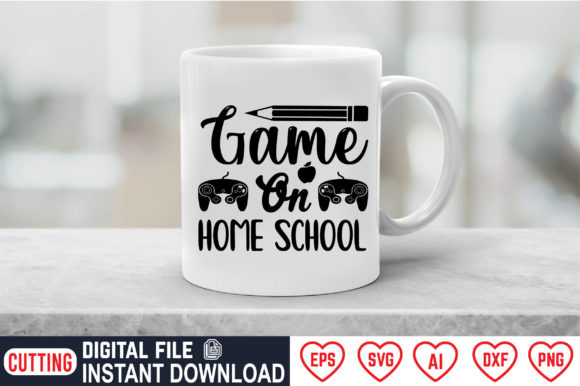
When I first pulled up the Game on Home School file on my digitizing workstation, my immediate reaction wasn't just about the aesthetic; it was about potential. As a designer who spends more time troubleshooting stitch paths than actually stitching, I look for files that bridge the gap between a cute graphic and a durable, sellable product. This design, categorized under Crafts and Graphics, presents itself as an instant download cutting file compatible with various software like Cricut and Silhouette. However, for us embroidery professionals, the real question is how this vector-based concept translates when we commit to thread, needle, and fabric.
The Visual Personality and First Impressions
The mood of Game on Home School is undeniably playful yet structured. It captures that specific energy of returning to learning or engaging in educational play, making it a strong contender for back-to-school collections or homeschooling community merchandise. The layout feels balanced, avoiding the clutter that often plagues themed designs. When evaluating the visual personality, I noticed clean lines that suggest a modern approach rather than a dated, clip-art style. For a handmade product to stand out on an Etsy shelf or at a craft fair, the design needs to speak clearly from a distance. This graphic does exactly that. Its simplicity allows the texture of the thread colors to do the heavy lifting, rather than relying on overly complex shading that can muddy the final look.
Real-World Application: The Custom Tote Scenario
To truly test the viability of this design, I imagined a specific client request: a custom order for a local homeschool co-op needing branded tote bag designs for their annual field day. This is where Game on Home School shines. Placed centrally on a canvas tote, the design offers enough surface area to be legible without overwhelming the bag's utility. If I were executing this as a machine embroidery design, I would likely adapt the cut-file elements into a combination of satin stitch for the borders and a light fill stitch for any larger shapes.
The beauty of this specific graphic is its versatility across demographics. While the description mentions uses for men, women, kids, and babies, I see its strongest performance in the youth and family sectors. Imagine this stitched onto a child's sweatshirt embroidery project or a personalized lunch sack. The "game on" theme suggests activity and fun, which resonates well with parents looking for unique personalized gifts that aren't just another generic store-bought item. For an Etsy seller, this kind of adaptability means one purchase can yield multiple listing variations, maximizing the return on investment for the design assets.
Navigating Fabric Textures and Hoop Constraints
However, no design is without its challenges, and a professional review must address where caution is needed. Since Game on Home School originates as a cutting file, translating it to embroidery requires careful attention to stitch density. If you are working on textured fabrics like a waffle-knit towel or a thick fleece blanket, fine details might get lost. I would advise against using this on highly textured surfaces unless you simplify the inner details significantly.
Furthermore, consider the hoop size. If you are aiming for a small pocket logo on a polo shirt or a baby embroidery piece like a onesie, you must ensure the text elements within the design remain readable when scaled down. Tiny lettering is the first casualty of reduction. Before committing to the final garment, always test the design on scrap fabric of the same weight. This is crucial for stretchy materials; without the proper stabilizer, the stitching could pucker, distorting the "game on" message into something illegible. For curved surfaces like caps, the flat nature of this graphic might require re-digitizing to account for the curvature, ensuring the columns of text don't splay outward.
Color Contrast and Visual Clarity
The success of this embroidery project heavily relies on your choice of thread colors. Because the design likely features bold shapes, high contrast is your friend. On dark fabrics, a light, vibrant thread palette will make the design pop, enhancing the finished product's professional look. Conversely, if you are stitching on white or light gray custom apparel, you need to ensure the outline stitches are dense enough to prevent the fabric from showing through gaps, which can make the design look unfinished. I recommend running a black-and-white mockup test first. If the design loses its definition in grayscale, you may need to adjust your thread choices to create better separation between elements.
Commercial Viability and Brand Consistency
For small shop product owners and creative entrepreneurs, consistency is key to building brand trust. Game on Home School offers a cohesive look that can be easily integrated into a broader collection. Whether you are creating holiday embroidery for teacher appreciation week or commercial embroidery for a boutique's fall line, this design maintains a level of professionalism that elevates perceived value. Customers are willing to pay more for items that look meticulously crafted, and a clean, well-executed stitch-out signals quality.
It is important to note the licensing aspect. As this is described as an instant download for cutting machines, you must verify the terms before selling finished physical goods or digital derivatives. Some creators allow commercial use of the physical item but restrict the resale of the file itself. Always read the fine print to protect your craft business from potential infringement issues. If the license permits, this file could be a goldmine for printable mockups used in marketing materials, allowing you to showcase how the design looks on various products before you even stitch a single thread.
Final Verdict for the Practical Maker
In conclusion, Game on Home School is a versatile graphic that holds significant promise for the thoughtful embroiderer. It is not just a pretty picture; it is a functional element that, when treated with the right technical respect, can become a staple in your product lineup. From embroidered patches to full-back jacket designs, the potential is vast. Just remember to respect the limitations of the medium. Check your stabilizer choices, mind your tension, and never skip the test stitch. By doing so, you transform a simple digital file into a tangible piece of art that brings joy to the wearer and profit to the maker.