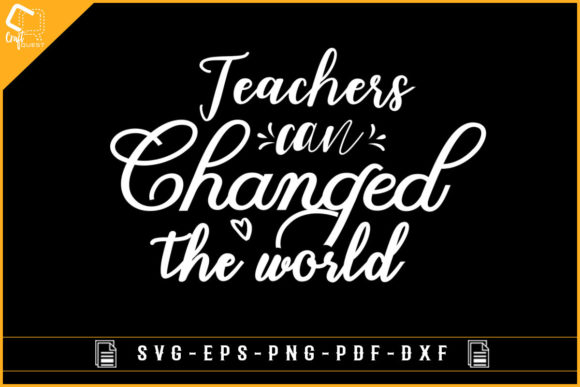
Review: Teachers Can Change the World Tshirt Svg for Embroidery
As a designer who spends more time staring at stitch simulations than actual sunlight, I approach every new digital embroidery file with a healthy dose of skepticism. We have all been there: you buy a cute graphic, digitize it quickly, and then watch in horror as your machine turns a beautiful sentiment into a puckered mess of thread breaks and registration errors. That is why I took a close look at the Teachers Can Change the World Tshirt Svg before committing it to any real-world embroidery project. While this asset is marketed primarily as a cut file for vinyl and paper crafts within the Crafts and Graphics categories, my job is to determine if it holds up under the needle for custom apparel and handmade goods.
First Impressions and Visual Personality
When I first pulled up the design, the immediate takeaway was its bold, declarative nature. The phrase "Teachers Can Change the World" carries a heavy emotional weight, so the typography needs to be legible and confident. In its raw SVG form, the layout feels balanced, with a clear hierarchy that emphasizes the word "World." For an embroidery adaptation, this is promising. A design that relies on tiny, intricate script often fails when translated to thread, but this piece has a structural solidity to it. The mood is inspiring and professional, making it an ideal candidate for boutique branding or teacher appreciation gifts. It avoids the overly cutesy clip-art vibe that can sometimes cheapen a handmade product, leaning instead into something that feels like a statement piece.
Real-World Application: The Tote Bag Scenario
To truly test the viability of this design, I imagined a specific client request: a set of premium canvas tote bags for a local school's end-of-year faculty luncheon. This is a classic use case where durability and aesthetics must collide. If I were to adapt this Teachers Can Change the World Tshirt Svg for a tote bag design, the large flat surface area of the canvas would be perfect. Unlike stretchy knits, canvas provides a stable foundation, allowing for higher stitch density without worrying about fabric distortion.
In this scenario, I would likely convert the solid shapes into a combination of fill stitch for the larger letters and a clean satin stitch border to define the edges. The result would be a textured, tactile finished product that feels substantial in the hand. Customers—whether they are school administrators buying in bulk or parents purchasing a single gift—react well to items that feel engineered rather than just printed. An embroidered version of this graphic elevates the perceived value instantly. It transforms a simple bag into a keepsake that a teacher might actually use daily, rather than tossing in a drawer.
Navigating Fabric Challenges and Hoop Limitations
However, not every surface is as forgiving as canvas. If you are planning to use this design on a fitted sweatshirt embroidery project or a thin baby onesie, you need to proceed with caution. The original files are vector-based graphics, meaning they do not come with pre-defined stitch paths or hoop size constraints. It is entirely up to the digitizer or the machine operator to interpret how this scales.
For baby embroidery, scaling down the design to fit a small chest area could compromise the legibility of the smaller text. If the letters become too narrow, the satin columns might become unstable, leading to thread bunching. Similarly, on textured fabrics like heathered sweatshirts, fine details can get lost in the weave. My advice is to always test the design on scrap fabric first. Check how the thread colors contrast against the background; a dark navy shirt might swallow a black outline, ruining the visual impact. Furthermore, curved surfaces like caps present a unique challenge. The curvature can distort the straight lines of the text, making the world look tilted. If you attempt a cap, ensure you are using a stiff stabilizer to maintain the integrity of the shape.
Technical Considerations for Digitizing
Since this product includes SVG, EPS, DXF, PNG, and PDF files, it is versatile for various cutting machines, but for embroidery, we are looking at the vector data (SVG, EPS, DXF) as a starting point for digitizing software. There are no preset stitch counts or machine compatibility notes included in the standard package, which is typical for graphic assets. This means you cannot simply load it into your machine and hit start. You must verify the licensing terms if you intend to sell the digitized version or the commercial embroidery results. Always confirm whether the license allows for derivative works like stitched apparel before listing them in your Etsy seller shop or small shop product catalog.
When preparing the file, pay close attention to the corners of the letters. Sharp angles in a graphic file can translate to excessive needle penetrations in embroidery, causing fabric damage. Rounding these slightly in your digitizing software can improve the longevity of the custom apparel. Also, consider the washability. Teacher gifts are often worn or used frequently. A design with poor underlay or insufficient tie-offs will fray after the first few laundry cycles, damaging your reputation as a creator. Test your stitch-out in both black and white mockups to ensure the design reads well even without color, which is crucial for monochromatic branding or cost-effective production runs.
Enhancing Brand Value and Customer Trust
Ultimately, the decision to use the Teachers Can Change the World Tshirt Svg comes down to the story you want to tell. For an Etsy seller specializing in educator gifts, offering an embroidered version of this popular slogan differentiates you from the sea of vinyl decals. It signals quality and effort. The visual appeal of raised thread adds a layer of sophistication that flat prints cannot match. This attention to detail builds customer trust. When a buyer sees a cleanly stitched, well-stabilized design, they associate that precision with your entire brand.
Whether you are creating an embroidered patch for a backpack, a holiday ornament for a staff room, or a personalized pillow cover for a retirement gift, this design has the versatility to work across multiple mediums. Just remember that the source file is a graphic, not a stitch file. The magic happens in your preparation. By respecting the limitations of fabric texture, choosing the right stabilizer, and carefully mapping out your stitch types, you can turn a simple digital download into a cherished heirloom. The potential is there, but it requires the eye of an experienced maker to unlock it fully.